Rocket League UE6: What Changes for Casters
Psyonix has confirmed the long-rumored Unreal Engine 6 port of Rocket League. We break down the visual upgrades, the new spectator API, and what RLCS broadcast teams are already prototyping.
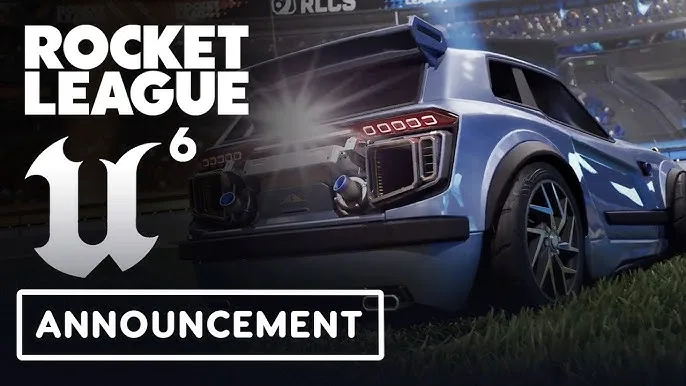
After more than a year of datamines, leaked job listings and increasingly thin denials, Psyonix has officially confirmed it: Rocket League is moving to Unreal Engine 6. The port is scheduled to ship in Q1 2027, with a closed broadcast-partner beta opening in October 2026 — just in time for the back half of the RLCS 2026 season.
Why this matters
Rocket League has been running on a heavily modified branch of Unreal Engine 3 since 2015. That codebase is the reason the game still hits 240 FPS on a potato — and also the reason every new platform port (Switch 2, Steam Deck, future cloud) is a months-long engineering project. UE6 finally gets Psyonix onto a maintained engine, which unlocks roughly everything: better lighting, Nanite-style geometry for arenas, native cross-platform replay format, and — most importantly for our audience — a real spectator API.
What's actually changing in-game
- Rebuilt lighting and reflections on all arenas (look closer to a 2026 sports broadcast than a 2015 indie game).
- Re-mastered car models and decals, with backwards-compatible visuals for competitive players who want the old look.
- 60-tick physics retained — Psyonix has been explicit that competitive feel will not change.
- Replay file format unified across platforms (no more 'can't open PC replay on console').
The new spectator API
This is the part casters and broadcasters should care about most. UE6 Rocket League will expose a structured, real-time data feed for spectator clients: ball position and velocity, per-player boost, demo events, possession changes, and shot quality. Today, every RLCS overlay scrapes this data via a third-party plugin (SOS / BakkesMod) that breaks every time the game patches. The new API replaces that with a first-party endpoint.
For overlay tools like HUDrift, this is a generational upgrade. The 'will it work after Tuesday's patch?' question that has hung over Rocket League broadcasting for a decade essentially goes away.
What RLCS broadcast teams are prototyping
We spoke to three production teams already in the broadcast-partner beta. The common themes:
- Live shot-quality overlays — xG-style 'expected goal' percentages appearing on screen the moment a shot is taken.
- Possession charts updated round-by-round, similar to football broadcasts.
- Cleaner replay clipping — the unified replay format means an in-arena producer can clip and push a highlight to social in under 30 seconds.
- Per-player camera feeds for picture-in-picture, finally without the latency penalty of the old SOS bridge.
What this means for community casters
Two things. First: the gap between a community RLCS co-stream and the main broadcast is about to narrow dramatically, because the underlying data is the same. Second: any overlay or scene pack built on the current SOS plugin will need to be migrated when the UE6 build drops. Start that conversation with your overlay tool now — the ones that will be ready on day one are the ones already in the beta.
Timeline
- Oct 2026: closed broadcast-partner beta opens (apply via Psyonix).
- Dec 2026: public PTR for competitive players.
- Q1 2027: full release, replacing the current build.
- RLCS 2026-27 World Championship: confirmed to run on UE6.
Rocket League broadcasting is about to look a lot more like a real sports broadcast. If you're a caster who's been waiting for the right moment to invest in production quality, this is it.