Paris Major 2026: Rocket League Broadcast Lessons
The RLCS Paris Major at Accor Arena delivered record viewership, a new spectator API rollout and a production playbook that community casters can copy. Here's what happened — and what it means for your next broadcast.
The Paris Major 2026 is in the books, and by almost every metric it was the biggest Rocket League broadcast of the year. The three-day RLCS Major at the Accor Arena pulled a 712,000 peak concurrent viewers across Twitch and YouTube during the grand final — the highest RLCS number on record — and delivered a production stack that's already being studied by every TO planning a Q3 or Q4 event.
The numbers
- Peak viewers: 712K concurrent during the grand final (up from 548K at Rotterdam 2025).
- Total hours watched: 18.4M across the three-day event.
- Co-streams: 287 approved channels across 14 languages.
- Average series length in playoffs: 42 minutes (shorter, more action-dense broadcasts).
What changed on the broadcast side
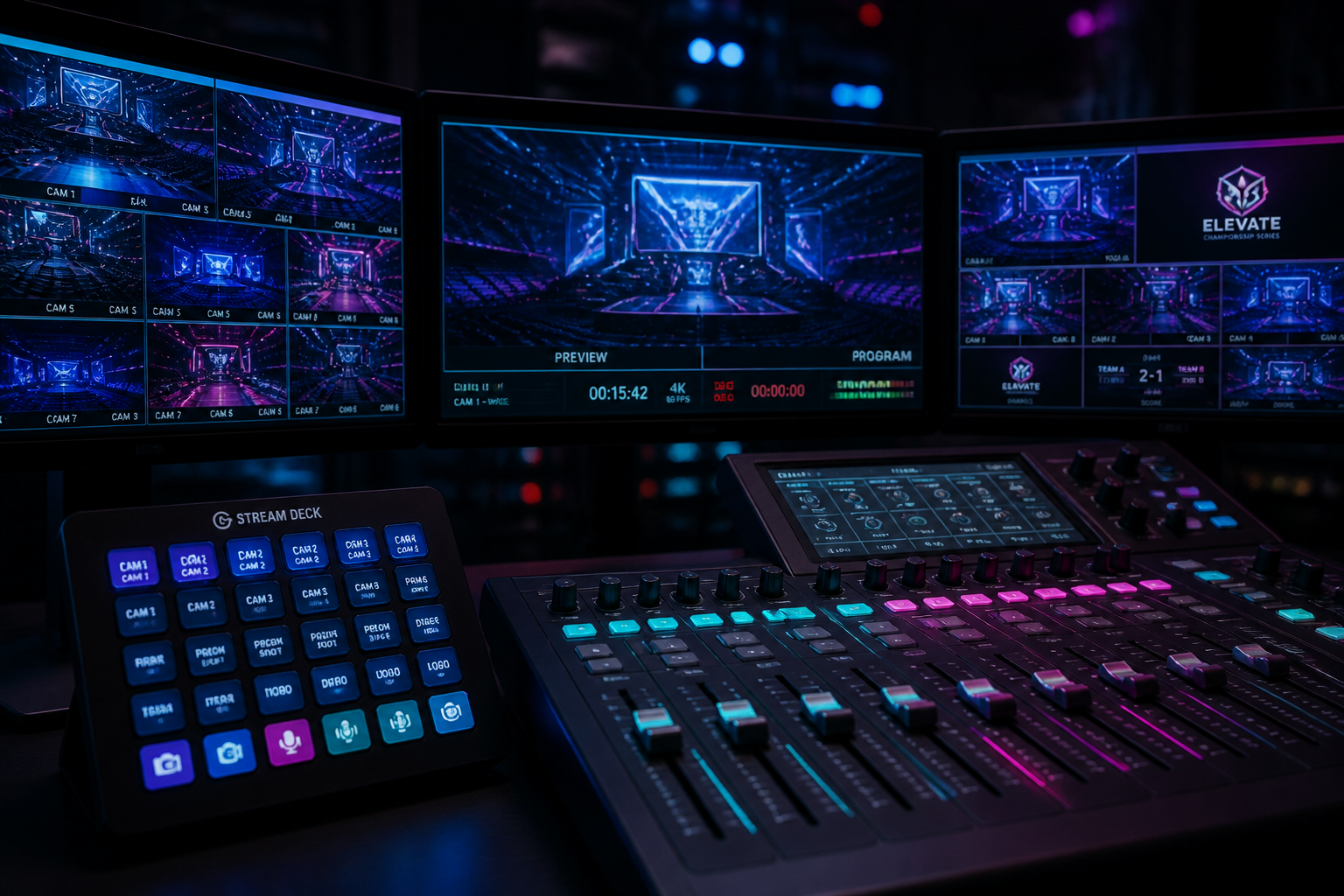
Three production decisions stood out, and all three are copyable by a community broadcaster with a single PC and OBS.
1. The new spectator API, finally used at scale
Psyonix's expanded spectator telemetry API — quietly rolled out to broadcast partners earlier this season — got its first Major-level stress test in Paris. Live boost-usage charts, possession heatmaps and shot-quality overlays appeared on screen within milliseconds of a play, all pulled directly from a first-party data feed instead of the third-party SOS/BakkesMod bridge the scene has relied on for years.
Practical takeaway: if your overlay tool can consume the same endpoint, you can show the same depth of stats. The gap between a tier-1 broadcast and a community one used to be a dedicated plugin dev. It isn't anymore.
2. Scene-pack swaps mid-broadcast
The broadcast team re-skinned its entire lower-third and scoreboard package between the group stage and playoffs without taking the stream down. The underlying OBS scenes didn't change — only the overlay data layer did. This is the exact pattern HUDrift is built around: keep scenes stable, swap the design and data on top.
3. Co-stream parity, on purpose
For the first time at an RLCS Major, Psyonix distributed a free overlay scene pack to approved co-streamers ahead of the event. The result: 250+ community broadcasts that looked visually consistent with the main show, instead of the usual patchwork of mismatched scoreboards and hand-typed team tags. Expect this to become the default at the London Major in September.
Storylines that drove the numbers
An RLCS Major lives or dies on its narratives, and Paris had two massive ones: Karmine Corp's first-ever Major title on home soil (a reverse-sweep from 0-2 down in the grand final), and the return of GarrettG to the international stage after an 18-month hiatus. The grand final went to game seven, ended at 23:47 local time, and pulled enough European viewership to shatter the old concurrent record by nearly 30%.
What this means for you
If you cast Rocket League at any level, three things are worth doing this month: check whether your overlay tool already supports the new spectator API, swap your lower-thirds to a data-driven overlay (so you can re-skin per event instead of per match), and reach out to any TO running regional qualifiers in your region. The post-Major attention window is the cheapest growth opportunity in Rocket League broadcasting, and it closes fast.
Paris raised the bar. The good news is the tools to clear it are now sitting on your desk.