How to Commentate Esports: A Guide to Play-by-Play vs. Color Casting
Learn how to commentate esports with our guide on play-by-play vs color casting. Master the fundamentals and find your voice on the broadcast.
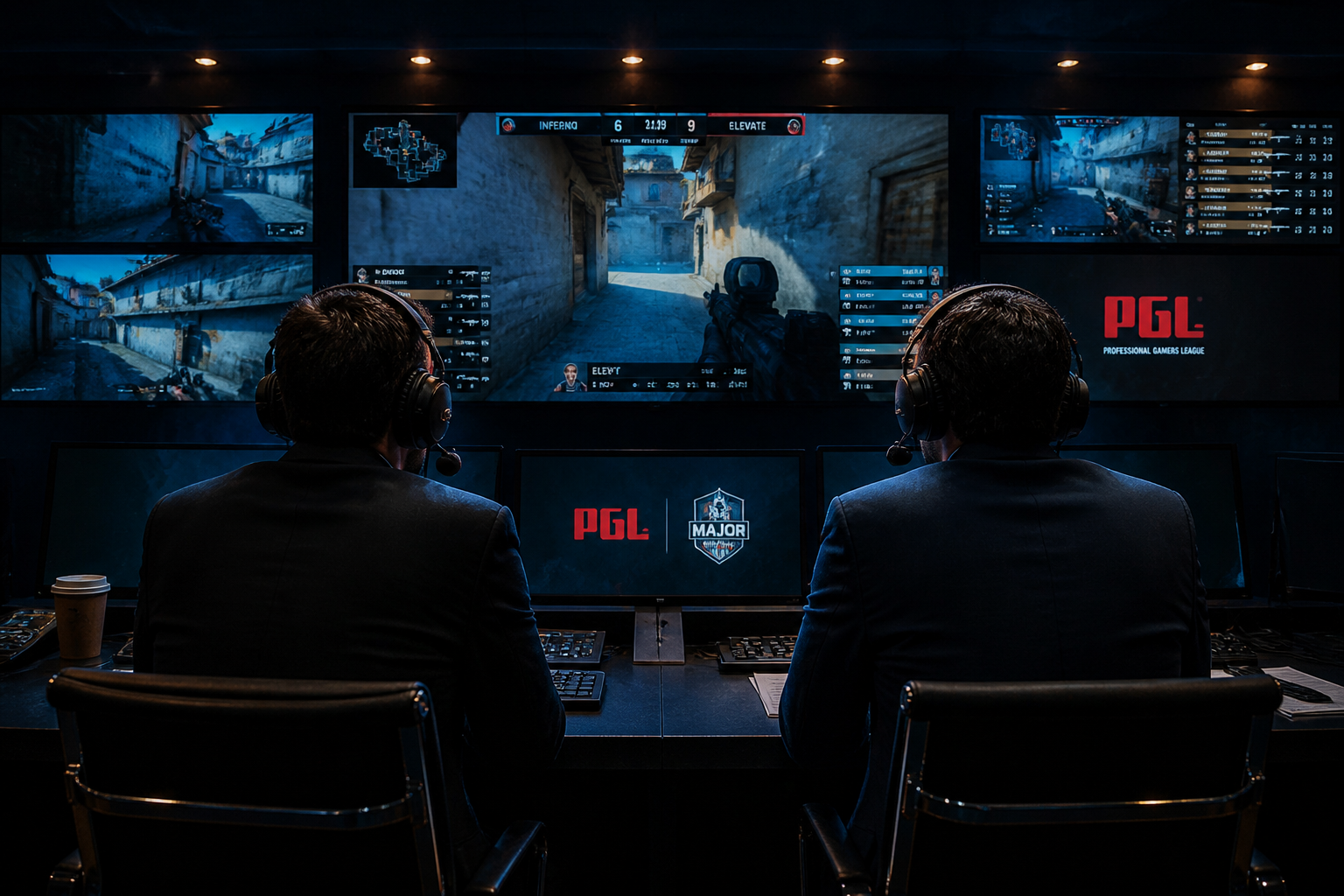
Every iconic esports moment is amplified by the voices that narrate it. The tension, the strategy, the explosive plays—all are shaped by the commentators. If you've ever watched a broadcast and thought, "I could do that," this guide is your starting point. Understanding the core roles of play-by-play and color commentary is the first step in learning **how to commentate esports** effectively. This post will break down the specific skills, preparation, and techniques required for each role, helping you find your place on the casting desk and turn your passion into a craft.
The Engine of the Cast: How to Commentate Esports Play-by-Play
The Play-by-Play (PBP) caster is the engine of the broadcast, responsible for describing the action as it happens. Your primary job is to be the eyes of the audience, delivering a clear, concise, and exciting account of the game. This role demands speed, accuracy, and an encyclopedic knowledge of in-game terminology. You are not analyzing why a player made a certain move; you are stating that they did, what the immediate result was, and what is happening next. Clarity is your most valuable asset.
In a fast-paced game like CS2, a PBP caster's cadence is critical. You must process visual information and translate it into verbal description almost instantly. This means using short, impactful sentences. For example, instead of saying, "Player A is now moving through the A-long doors and sees Player B near the car, so he is starting to shoot at him," you would say, "EliGE pushes A-long! Spots nitr0 car, the spray comes out—one down!" The economy of words creates energy and makes the action easier to follow.
Let's break down a hypothetical final round call, inspired by a team like 9z making an unexpected run, such as their recent grand final appearance against Alliance. Imagine it's map point on Inferno, 15-14. The PBP call might sound like this: (30 seconds to go) "9z have the bomb down A, it's a 2v2 post-plant. max holds the cross from graveyard, dgt covers pit. Alliance have to retake. (20 seconds) niko pushes out of lane, uses a flash—max is blind! niko swings wide... gets the trade onto max! It's a 1v2 for dgt! (15 seconds) The bomb ticks down. Dracu from CT, he's walking, no time for stealth. dgt hears the steps, he's holding the angle from quad. (10 seconds) Dracu peeks... dgt with the one-tap! It's a 1v1! Where is the last man? It's sL1m. He's coming from apps. (5 seconds) sL1m has to commit! He drops down, no time! dgt is waiting... THE SHOT CONNECTS! 9z HAVE DONE IT! THEY'VE WON THE MAP!" Notice how every phrase describes a direct action, player name, location, or consequence. This is the core of PBP.
The Storyteller's Craft: Adding Depth with Color Commentary
If the PBP caster tells you *what* happened, the Color Commentator tells you *why* it happened and *why it matters*. This role is about providing context, analysis, and narrative. You are the storyteller, weaving the threads of player history, team strategy, economic implications, and meta trends into the fabric of the game. Your moments to shine are in the lulls: between rounds, during technical pauses, in the pre-game and post-game analysis.
Your preparation involves more than just knowing the game; it involves knowing the scene. You need to follow player transfers, read interviews, and understand team dynamics. For example, when discussing Cloud9, you could reference their recent struggles and bring in a direct quote. As their IGL Boombl4 stated, "First we need to make playoffs and gain experience; by the end of next season, we can start putting up a worthy fight." This grounds your analysis in reality and shows you've done your homework. You could then analyze a specific play in the context of that statement: "And there you see Cloud9 playing it slow, not forcing the retake. This speaks to what Boombl4 said about gaining experience—they're not trying to be heroes, they're playing the percentages, building good habits for the long run."
Another excellent topic for a color caster is a major roster or staff change, like G2 Esports moving Dylan Falco and bringing in Perkz as head coach. This isn't just a name swap. Your job is to explore the implications. You can discuss Perkz's legendary history as a player, his potential coaching philosophy, and how that might change G2's in-game style. Will they become more aggressive? Will it unlock a new level for a specific player? By posing these questions and offering educated theories, you give the audience a deeper appreciation for the strategic layer of the sport.
The Duo Dynamic: How to Commentate Esports as a Team
Esports commentary is rarely a solo act; it's a dance between the PBP and Color casters. The chemistry and rhythm of the duo can make or break a broadcast. The fundamental rule is to give each other space. You must actively listen to your partner and know when to speak and when to stay silent. The most common mistake new duos make is talking over one another, which creates a confusing and unpleasant listening experience for the audience.
A good cast has a natural ebb and flow. During intense action, the PBP caster takes full control. The Color caster's job here is to be silent, letting the play-by-play breathe. As soon as the action resolves—a round ends in CS2, a team fight concludes in Valorant, a goal is scored in Rocket League—the PBP should 'toss' the conversation to the Color caster. This can be a direct question ("What went wrong for Team A there?") or a simple statement that invites analysis ("A flawless execute onto the B site.").
The Color caster then has a window—typically 15-30 seconds—to provide their analysis. They must be concise. Once their point is made, they need to 'toss' it back to the PBP caster before the next action phase begins. For example: "(Color) A flawless execute indeed. They used all three smokes to completely isolate the site defenders, a textbook play we've seen them practice. (Toss back) Let's see how Team B adjusts their economy for this force buy." This seamless transition keeps the broadcast moving and ensures both casters contribute effectively without stepping on each other's toes.
Essential Tools and Preparation for Aspiring Casters
Your voice is your primary instrument, and your microphone is how you capture it. Investing in a quality microphone is non-negotiable. While a high-end USB mic like a Rode NT-USB+ or a HyperX QuadCast S is a great start, the professional standard is an XLR setup. This involves a dynamic microphone (like a Shure SM7B or Rode Procaster, which are great at rejecting background noise) connected via an XLR cable to an audio interface (like a Focusrite Scarlett Solo or Audient EVO 4), which then connects to your PC. This setup provides cleaner audio and more control.
Beyond the hardware, your preparation is key. You should have a two-monitor setup. One monitor is for the game you are casting (the 'program' feed). The second monitor is for your notes and broadcast software. Use a tool like Google Docs or OneNote to prepare for each match. Your notes should include team rosters, recent results, player stats, map win rates, and any interesting storylines or facts you can use for color commentary. Authoritative sources like Liquipedia and HLTV are indispensable for this research.
Finally, don't neglect the visual aspect of your broadcast. Even if you're only casting over gameplay, a professional presentation matters. This means using clean, well-designed broadcast graphics. A simple overlay showing the score, team names, and player information elevates the viewing experience. You can find many pre-made packs or design your own. With HUDrift, you can easily integrate our professional-grade esports overlays into your stream, giving your cast a polished look that helps you stand out. Good audio is only half the battle; a clean visual presentation completes the package.
Finding Your Voice and Getting Your Reps In
The only way to improve as a caster is by casting. You need to get what the community calls 'reps'—hours and hours of live practice. Don't wait for a major tournament to hire you. Find opportunities to cast at the grassroots level. Many online tournament organizers are looking for volunteer casters for their events. This is a fantastic way to build experience, network with other broadcast talent, and start building a portfolio.
Another invaluable practice method is VOD casting. Download a professional match replay that has no commentary (many are available on YouTube or via in-game clients). Record yourself casting the match as if it were live. Afterwards, watch it back and be brutally honest with your self-critique. Did you miss key moments? Did you talk over your (imaginary) co-caster? Was your analysis sharp? Compare your cast to the official broadcast to see what the pros did differently. This process is essential for identifying and correcting your weaknesses.
As you get more reps, you'll start to develop your own unique style and voice. Are you a high-energy, hype-focused PBP? Or a calm, analytical Color caster? Lean into your strengths. Create a demo reel—a 2-3 minute video showcasing your best PBP moments and your sharpest analysis—to send to tournament organizers. You can find many open community tournaments that use platforms like HUDrift to manage their events. Check out our tournaments page to see how organizers use our tools to streamline signups and match coordination, which can often be your entry point to casting for them. For more general broadcast tips, resources like the Twitch Creator Camp offer a wealth of knowledge.
You've learned the difference between play-by-play and color, how to prepare for a cast, and how to get practice. The theory is important, but practical application is everything. The next step is to put that knowledge to use and start building your broadcast. Give your cast the professional edge it deserves with a full suite of production tools. Download HUDrift and get access to high-quality overlays and broadcast tools to make your stream look and feel like a major event.
Frequently Asked Questions
- What is the difference between play-by-play and color casting?
- A play-by-play (PBP) caster describes the action as it happens, focusing on the 'what'. They provide a fast, accurate account of the game. A color caster provides analysis and context, focusing on the 'why'. They discuss strategy, player history, and the story of the match during lulls in the action. The two roles work together to create a complete broadcast.
- How do I practice esports commentary?
- The best way to practice is by casting. Volunteer for online community tournaments to get live experience. You can also VOD cast by downloading a match replay without commentary and recording your own voice over it. Reviewing your own recordings is crucial for identifying areas for improvement. Consistent practice, or getting 'reps', is the key to developing your skills.
- What equipment do I need to start casting?
- At a minimum, you need a good quality USB microphone. For a more professional setup, an XLR dynamic microphone connected to an audio interface is recommended. You will also need a stable internet connection, a two-monitor setup (one for the game, one for notes/software), and broadcast software like OBS Studio. Good lighting and a clean background are also important if you plan to use a facecam.
- Can one person be both a play-by-play and color caster?
- Yes, this is known as 'solo casting'. It is significantly more difficult than casting as part of a duo because you must fluidly switch between describing the action and providing analysis. It requires immense game knowledge and vocal stamina. While many casters start by solo casting their own streams, most professional broadcasts use a duo to ensure a higher quality and more sustainable pace.